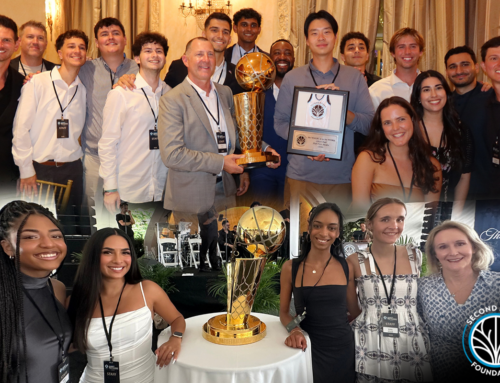

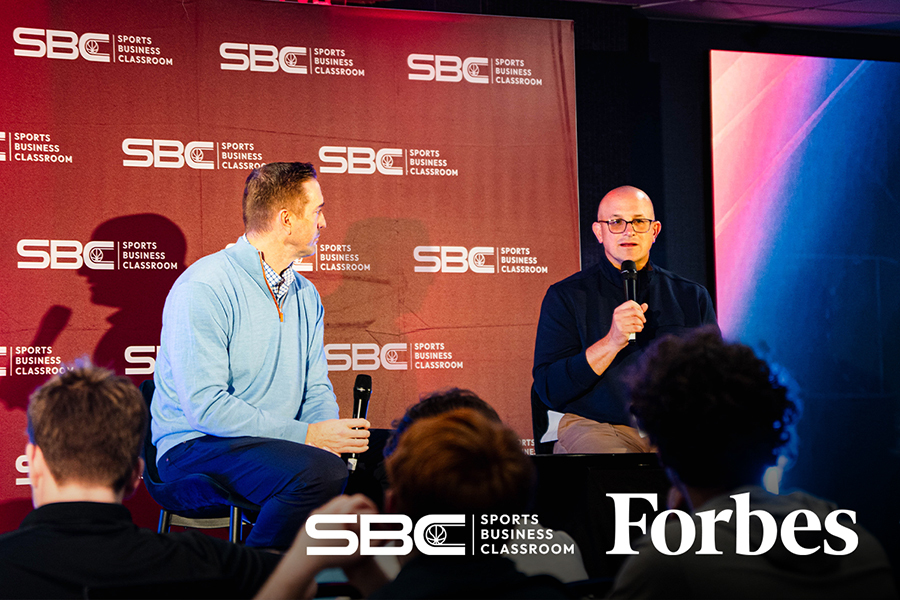
Special thanks to Mena Mirhom and Forbes for featuring Sports Business Classroom and highlighting the mentorship-driven model helping shape the next generation of leaders across the sports industry.
“Medical training for physicians began with a fully immersive apprenticeship experience. The term “residency” developed from the understanding that the physician-in-training would essentially “live” in the hospital to understand the craft. The classroom can only offer a distant picture of what the art of medicine really is, but being around the person you are learning from has been the cornerstone of the model.
Business and leadership are quite similar in that the theoretical understanding of what it takes to lead or make difficult executive decisions is difficult to come by as a passive observer in a classroom.
As a psychiatrist who works with high performers across sports, business, and medicine, I spend a lot of time studying what separates people who reach their professional potential from those who plateau. The credentials matter less than most people assume. What consistently shows up instead is something simpler and harder to manufacture: the quality of the rooms they put themselves in, and what they did once they were there.
The psychology behind this is well established. Albert Bandura’s Social Learning Theory demonstrated that humans learn primarily through observation. Watching others operate, processing what we see, and deciding whether to replicate it is what allows concepts to form deeply. He called this vicarious learning, and decades of research have confirmed its power. I want to use this piece to examine the psychology behind why that gap matters and to point to a program that is doing something genuinely different about it.
What Immersive Business Education Actually Looks Like
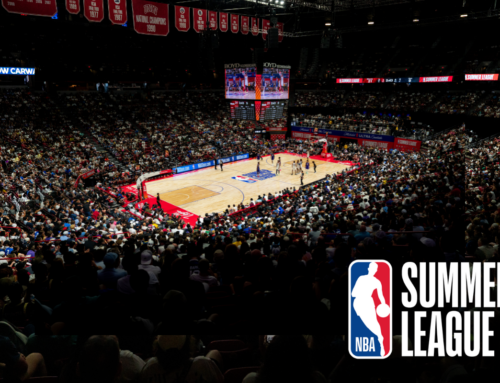
I recently spent time with the Sports Business Classroom (SBC), a program that has been quietly building something different inside the NBA ecosystem for several years. Its flagship offering, the Business of Basketball Immersive Experience, runs alongside the NBA Summer League in Las Vegas each July and the All-Star game. This year, July 12–18, 2026, it will bring together aspiring and seasoned sports business professionals for a week unlike anything a university offers.
The structure itself is worth examining through a psychological lens. SBC is deliberately organized to mix information, mentorship, and hands-on experience. Participants receive broad exposure across the core areas of the business (the “General Education” sections), and then choose one of three majors for deeper immersion: Athlete Representation, Basketball Operations, or a third concentration tailored to their career goals. The curriculum covers athlete representation and contract negotiation, the NBA salary cap and CBA, scouting, video and analytics, media and broadcast, basketball operations, and the practical mechanics of networking and job acquisition. Past instructors and participants include NBA Commissioner Adam Silver, Rob Pelinka, Rick Carlisle, Mike D’Antoni, and dozens of working front office executives and coaches.
TAKEAWAY: When evaluating a professional development opportunity, assessing the disposition it aims to instill is key. Programs that aim to change how you think and offer real-world exposure to experts are often the ones worth prioritizing.
Why Doing Beats Watching
One of the clearest markers of a well-designed immersive experience is whether it requires participants to make real decisions under realistic conditions. Passive exposure to expertise is valuable. Active participation, where you are the one choosing, building, presenting, and defending, is actually transformative. The cognitive and emotional engagement is categorically different, and so is the retention.
Participants run mock expansion drafts, build rosters from scratch, create jersey and arena mockups, negotiate trades, and present their decisions to rooms full of people who have actually done these jobs. It is worth pausing on what that last detail means: your work is being evaluated by executives who can tell the difference between someone who studied the machine and someone who understands it.
Edwin Valentin, a 25-year entertainment industry veteran using the program to transition into sports, described what it was like to build a mock expansion team.
“You really have to think five steps ahead just because we’re building an expansion team. You have to think about the marketing, the sponsorships, all of that. Making mockups of jerseys, making mockups of the arena, you’re really broadening the horizons of the basketball world.”
– Edwin Valentin, SBC Participant
Bobby Marks, an ESPN analyst and former NBA front-office executive who serves as the SBC’s Lead Instructor, watches participants closely during these simulations. His evaluation criteria are revealing and consistent with what I see separate rising professionals from plateauing ones across every high-performance field I work in.
“The most important thing is to learn how every part of the machine runs. And the other thing is, if you have the ability to get in, do it. It doesn’t matter if it’s not something you don’t want to do right off the bat. Get in the door and then be flexible.”
He also makes the stakes of professional presentation explicit in a way that most mentors leave implicit.
“If you don’t talk to people this week, you are wasting your money. Get out of your shell, network, meet people here. That is really the only way that’s going to lead to opportunities.”
Gabriella Wolk, a sports litigator who attended the program to deepen her understanding of basketball’s business architecture, named the specific thing no coursework can replicate.
“It’s easy to know what a job does in theory, but actually hearing from people who are doing it day to day and what brought them there. That’s what sets this apart. There’s a whole other ecosystem that most people never see.”
Gabriella Wolk, Sports Litigator & SBC Participant
TAKEAWAY Don’t wait for the ideal opportunity to get hands-on experience. Find the closest possible version of the work you want to do and get inside it. The learning that comes from doing under real conditions compounds in ways that observation alone never does.”
Click the following link to read the full article: https://www.forbes.com/sites/menamirhom/2026/05/08/the-mentorship-model-that-actually-builds-business-leaders/